
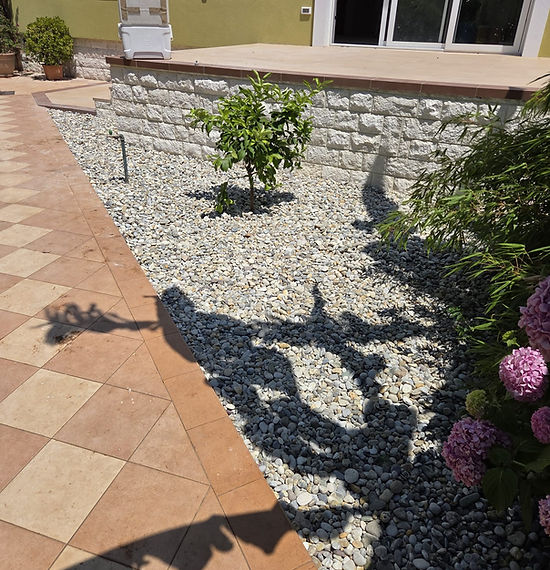
Installation of geotextiles and decorative gravel in Zadar
We prepare the terrain, install geotextiles, garden borders and decorative gravel, and, if necessary, plant and irrigate. We adapt the construction to the type of soil, slope, existing plants and how the space is used.
Why is geotextile placed under gravel?
The geotextile separates the decorative gravel from the soil, slows its decay into the substrate and reduces the appearance of new weeds. The surface remains neater, the gravel is easier to maintain, and its subsequent replenishment is simpler.
Geotextile is not a magic protection that permanently stops all weeds. Existing perennial plants need to be removed before installation, while over time weeds can also appear in the dust and organic matter that accumulates above the gravel.
What does the installation of geotextiles and gravel involve?
Field preparation
Removal of weeds, stones, waste and other obstacles and leveling of the surface before installation.
Geotextile installation
Precise cutting, overlapping and fastening of geotextiles while adapting to existing plants and installations.
Setting borders
Separating gravel from lawns, paths and other surfaces with garden or stone borders.
Filling decorative gravel
Selecting the appropriate fraction and evenly distributing the gravel over the prepared surface.
Placing geotextiles around plants
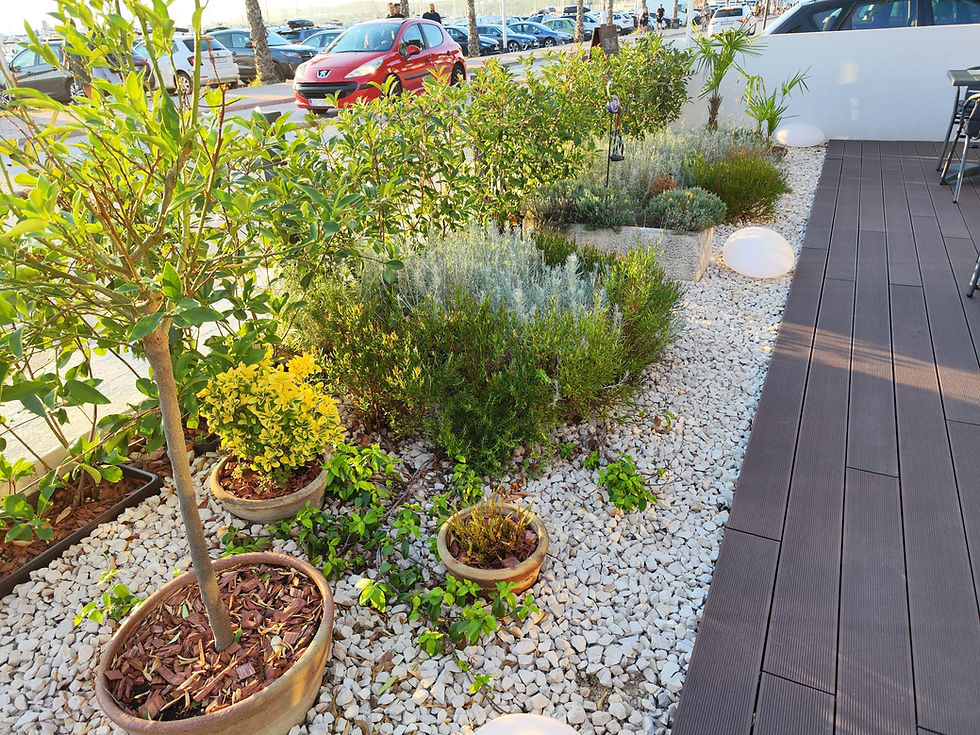
For areas with existing or new plants, the geotextile must be properly cut and placed so that it does not press against the trunk or base of the plant. The openings must allow for plant growth, water passage, and future maintenance.
It is best to plan planting, geotextile, decorative gravel and irrigation as a single unit. This way, pipes and drippers can be properly placed and the final plant arrangement can be determined before the final filling.
We choose the color, shape, and size of the gravel based on the style of the yard, surrounding materials, surface slope, and maintenance method. Finer fractions create a smoother and more even surface, while larger stones provide a more pronounced structure.
The required amount and thickness of the layer depends on the selected fraction, the condition of the substrate and the purpose of the surface. Before purchasing, we calculate the approximate required amount so that the layer is even and covers the geotextile.
Geotextile, planting and irrigation as one unit
The best results are achieved when the plant layout, irrigation system, borders and final gravel layer are planned before the work begins. This avoids the need to subsequently cut geotextiles, move stones and re-excavate the already finished surface.
As part of the same project, we can prepare the terrain, plant plants, install irrigation, geotextiles and decorative gravel.



Frequently asked questions
Zaustavlja li geotekstil sav korov?
No. It significantly reduces its occurrence.
Može li trava probiti kroz geotekstil?
It can, if it was already developed under it.
Može li se geotekstil postaviti oko biljaka?
That. It must be properly cut and leave room for their development.
Postavljate li vrtne obrube?
That
Ugrađujete li navodnjavanje prije šljunka?
Yes. That's the best time to install the installations.
Koliko je šljunka potrebno?
It depends on the surface, fraction and required layer thickness.
Can gravel be placed over existing weeds?
Not properly. The surface needs to be prepared first.
Geotextiles and decorative gravel in Zadar and the surrounding area
We carry out work in the areas of Zadar, Bibinje, Sukošan, Petrčane, Zaton, Nin, Biograd, Sveti Filip i Jakov and other places in Zadar County, depending on the type and size of the project.